You Won’t Believe What I Discovered in Bordeaux
Bordeaux isn’t just about wine—it’s a living canvas of culture, history, and unexpected charm. Wandering its sunlit streets, I stumbled upon hidden courtyards, artisans keeping centuries-old crafts alive, and markets bursting with local soul. This city reveals itself slowly, layer by layer, like the patina on an antique door. If you're seeking authenticity, Bordeaux delivers in ways you never anticipated. It does not shout its beauty; it whispers it—in the rustle of pages in a quiet bookbinder’s studio, in the clink of oyster shells at a bustling market, in the soft reflection of golden light across the Garonne. More than a destination, Bordeaux is an invitation to slow down, observe, and connect. And once you accept that invitation, your entire approach to travel begins to change.
The First Glimpse: Arriving in Bordeaux with No Expectations
Stepping off the train at Gare de Bordeaux Saint-Jean, one is immediately met with a sense of calm that feels rare in modern cities. There is no jarring rush, no overwhelming noise—just the quiet hum of trams gliding along cobblestone avenues and the gentle breeze rolling in from the Atlantic, carrying with it the faint scent of damp earth and fresh bread. The city unfolds in soft hues of honeyed stone, its 18th-century façades glowing under the afternoon sun. These golden limestone buildings, characteristic of Bordeaux’s architectural identity, stretch in harmonious symmetry, creating a visual rhythm that soothes the mind and lifts the spirit.
Walking toward the city center, the Garonne River appears like a ribbon of liquid silver, its surface shimmering with reflections of the sky and the graceful Pont de Pierre. This river, long a lifeline for trade and travel, still pulses with quiet importance. Boats drift lazily, and locals pause on its banks to read, to chat, or simply to watch the water flow. The pace here is deliberate, unhurried—a stark contrast to the hurried energy of Paris or the bustling chaos of southern port cities. It is in this stillness that the traveler first begins to shift from observer to participant.
Sensory details anchor the experience. The smell of warm baguettes from a corner boulangerie mingles with the faint floral notes of chestnut trees in bloom. A street musician plays a soft melody on an accordion near Place Camille Jullian, the notes curling into the air like smoke. The light, especially in the late afternoon, bathes everything in a warm, amber glow—a phenomenon locals affectionately call the lumière bordelaise. It is not just a visual treat; it is a mood, a feeling of being wrapped in something timeless. In these first hours, Bordeaux does not impress—it envelops.
Beyond the Vineyards: Uncovering Urban Culture
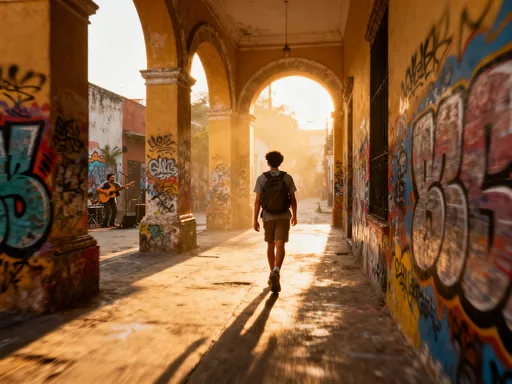
While the world knows Bordeaux for its legendary vineyards, the city itself is a thriving hub of contemporary culture. Just beyond the well-trodden wine routes lies a vibrant urban landscape where art, innovation, and tradition coexist in surprising harmony. The Bacalan neighborhood, once an industrial zone, has transformed into a canvas for bold street art. Towering murals cover the sides of old warehouses, their colors vivid against the weathered stone. One depicts a woman weaving grapevines into her hair; another shows a child releasing a flock of paper birds into the sky. These works are not graffiti—they are statements, stories painted large for all to see.
The Quartier des Chartrons, historically a district for wine merchants and antique dealers, now pulses with creative energy. Here, contemporary art galleries nestle beside 19th-century townhouses, and pop-up exhibitions appear in former storage cellars. The fusion of old and new is not forced—it feels organic, as if the city has always been this way. Historic façades provide a dignified backdrop, while modern expressions breathe life into forgotten corners. This dialogue between eras is one of Bordeaux’s quiet strengths, a reminder that preservation does not mean stagnation.
One of the city’s most iconic modern landmarks, the Miroir d’Eau (Water Mirror), sits just across from the grand Place de la Bourse. This expansive reflecting pool, the largest of its kind in the world, transforms throughout the day. In the morning, it mirrors the sky and the elegant buildings with flawless clarity. At midday, it fogs over with a fine mist, creating an ethereal atmosphere. And every few minutes, it drains completely, only to refill again—a cycle that draws laughter from children and quiet awe from adults. Locals use it as a meeting point, a place to pause, to cool their feet in summer, or to snap a perfect photo. It is not just an installation; it is a shared experience, a modern ritual in a city that values both beauty and community.
Markets as Cultural Hubs: Where Locals Live
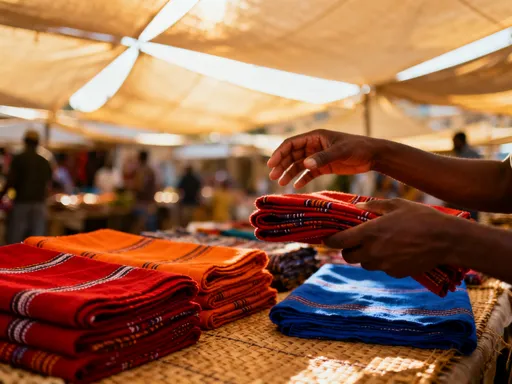
No visit to Bordeaux is complete without a morning spent at Marché des Capucins, the city’s oldest and most beloved market. Tucked behind the Capucins Church, this bustling bazaar comes alive at dawn, when vendors arrange pyramids of sun-ripened tomatoes, baskets of plump figs, and wheels of cheese wrapped in parchment. The air is rich with aroma—sharp tang of goat cheese, the briny freshness of oysters, the earthy warmth of mushrooms pulled from nearby forests. It is a feast for the senses, yes, but more than that, it is a window into the soul of Bordeaux.
The market is not a performance for tourists. It is where locals shop, where grandmothers haggle gently over the price of artichokes, where chefs from nearby bistros load crates of herbs into their vans. Each stall tells a story. At one, a fishmonger from Arcachon Bay displays oysters still glistening with seawater, their shells etched with the names of the beds where they were harvested. At another, a woman arranges jars of cornichons in neat rows, each pickle fermented according to a family recipe passed down for generations. When asked about her method, she smiles and says simply, “It’s not just about taste—it’s about memory.”
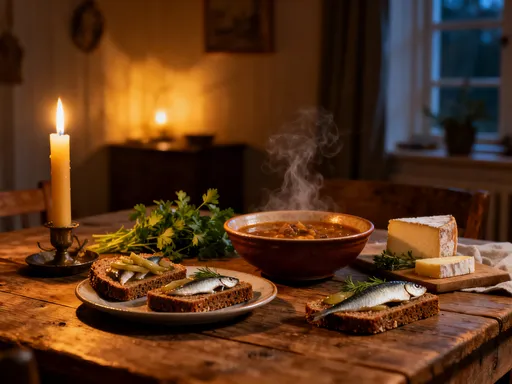
These interactions are not transactions—they are connections. A vendor offers a sample of duck rillettes on a crust of baguette. A cheesemonger explains the difference between a young and aged roquefort with the pride of a storyteller. The market is a place of education, of warmth, of generosity. It invites the visitor not just to buy, but to belong, even if only for a morning. And in that belonging, one begins to understand that food in Bordeaux is not merely sustenance—it is heritage, identity, love made tangible.
Artisans and Ateliers: Craftsmanship in the Modern Age
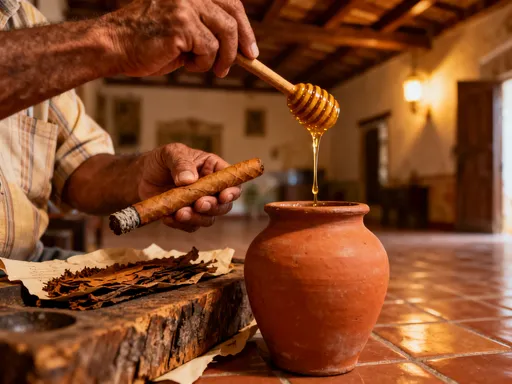
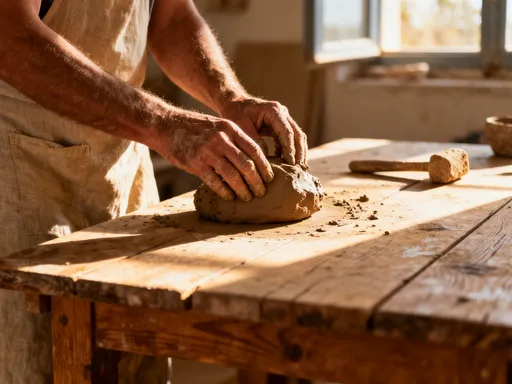
Scattered throughout Bordeaux’s winding streets are small workshops where time moves differently. In these ateliers, artisans practice crafts that have shaped the city’s character for centuries. In a narrow alley near Rue Sainte-Catherine, a bookbinder works in near silence, her hands moving with precision as she restores a 19th-century volume. The scent of leather and glue fills the air. Each stitch, each piece of marbled paper, is chosen with care. She explains that her work is not about restoration alone—it is about honoring the life already lived within the book, preserving its voice for future readers.
Not far away, a coppersmith hammers delicate sheets of metal into elegant serving dishes, a tradition rooted in the region’s culinary history. His tools are old, some inherited from his grandfather, yet his designs are modern—clean lines, subtle engravings of grapevines or river currents. He sells primarily to local chefs and private collectors, but he welcomes visitors who want to see the craft up close. “People come to watch,” he says, “because they miss the sound of hands making things.”
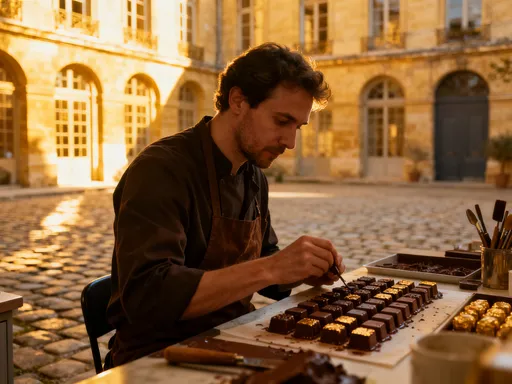
Perhaps the most enchanting of these artisans is the chocolatier tucked inside a 17th-century townhouse in the historic center. Here, small batches of chocolate are crafted using techniques unchanged for decades—stone grinding, slow conching, hand-tempering. The result is a product of astonishing depth: dark chocolate infused with fleur de sel from the Atlantic coast, milk chocolate layered with toasted hazelnuts from the Dordogne, white chocolate delicately scented with vanilla from Madagascar. But what stands out most is the care behind each piece. The chocolatier does not rush. She tastes, adjusts, reworks. “Chocolate,” she says, “should be an experience, not just a treat.” To support such artisans is to participate in a deeper kind of tourism—one rooted in respect, in sustainability, in human connection.
Architectural Layers: Walking Through Centuries
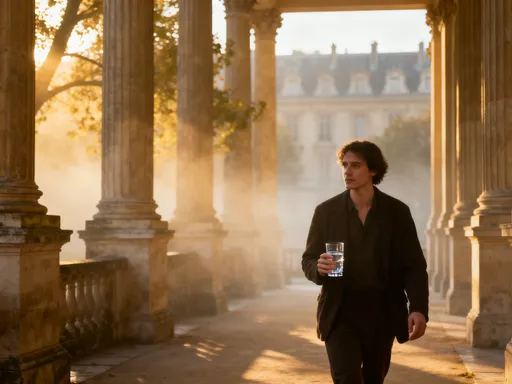
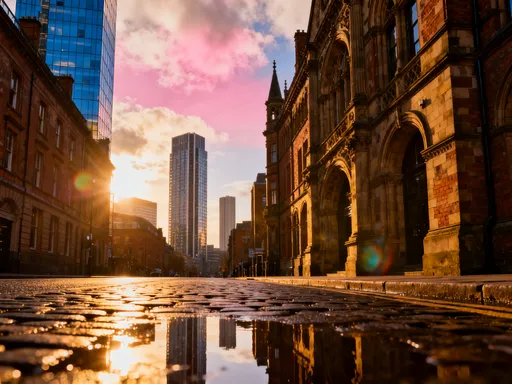
Bordeaux’s city center, designated a UNESCO World Heritage site in 2007, is a masterclass in architectural harmony. Its grand boulevards and elegant squares were largely shaped during the 18th century, a period of prosperity fueled by trade with the Americas and the Caribbean. The neoclassical style dominates—pale stone façades, symmetrical windows, wrought-iron balconies—but woven throughout are subtle variations that tell a richer story. In the Saint-Pierre district, one finds narrow medieval lanes where half-timbered houses lean gently toward one another, as if sharing secrets. In the Triangle d’Or, Art Nouveau details curl like vines around doorways and windows.
Place de la Bourse stands as the crown jewel of this architectural legacy. Once the seat of the royal intendant, it now serves as a symbol of civic pride and urban renewal. Its sweeping arcades and sculpted façades reflect perfectly in the Miroir d’Eau, creating one of the most photographed views in France. But beyond its beauty, the square represents resilience. Damaged during World War II and later threatened by modernization, it was meticulously restored in the late 20th century using original plans and materials. The goal was not to create something new, but to revive what had been lost—without losing the marks of time.
Equally significant is the Porte Cailhau, a 15th-century gateway that once marked the entrance to the city. Standing beneath its arched passage, one can almost hear the echoes of merchants, soldiers, and pilgrims who passed through centuries ago. Unlike some reconstructed landmarks, this gate has not been sanitized. Its stones are worn, its carvings faded—proof of endurance. Bordeaux does not hide its age; it wears it with dignity. Every crack, every weathered edge, is part of its story. And as you walk from one district to the next, you begin to see the city not as a collection of buildings, but as a living archive—a testament to the care and vision of generations.
The Rhythm of Daily Life: Cafés, Promenades, and Pauses
To truly know Bordeaux, one must adopt its rhythm. This is a city that values the pause, the linger, the quiet moment shared over coffee or wine. Mornings begin slowly. At sidewalk cafés along Cours du Chapeau-Rouge, residents sip espresso while reading the Sud-Ouest, the local newspaper. No one rushes. The sun climbs gently, casting long shadows across the pavement. By midday, the pace picks up slightly—markets buzz, shops open, bicycles glide down tree-lined avenues. But even then, there is no frenzy.
In the late afternoon, the city exhales. Families gather in Jardin Public, children chasing ducks around the ornamental lake, couples strolling beneath centuries-old oaks. In a shaded corner, a group of men plays pétanque, their laughter punctuating the soft thud of metal balls on gravel. When invited to join, a visitor quickly learns that the game is less about competition and more about camaraderie. There are no referees, no strict rules—just the joy of being together, of sharing space and time.
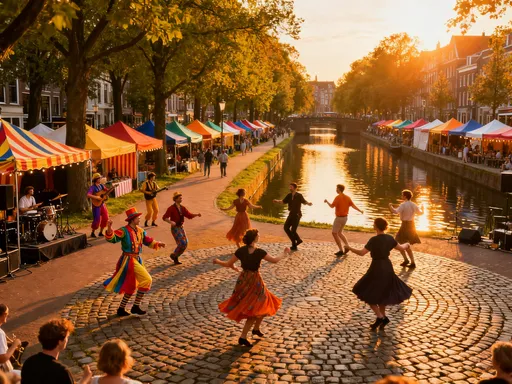
Evenings along the Garonne are magical. As the sun dips below the horizon, locals gather on the quays to walk, to talk, to watch the city lights flicker on. Some bring wine and cheese, spreading a blanket on the grass. Others simply stand at the edge of the Water Mirror, mesmerized by the reflection of the sky. There is no agenda, no need to document every moment. The art de vivre—the art of living—is not taught in schools. It is absorbed, learned through observation, through participation. And in embracing this rhythm, the traveler discovers a deeper form of enrichment—one measured not in sights seen, but in moments felt.
Why Bordeaux Changes How You Travel
Bordeaux does not dazzle with grand spectacles or adrenaline-fueled attractions. Instead, it reveals itself in quiet moments—a shared recipe, a handcrafted book, a sunset over the river. And in doing so, it shifts the very way one thinks about travel. No longer is the goal to check off landmarks or collect passport stamps. The focus becomes connection—to people, to place, to the subtle textures of daily life. The city teaches patience, presence, and the value of slowing down.
It also highlights the importance of staying longer. A day or two might allow you to see the major sights, but only by lingering can you witness the market vendor’s morning ritual, hear the coppersmith’s hammer at work, or join a spontaneous game of pétanque. Time becomes the most valuable currency. And with it comes access to experiences that cannot be booked or scheduled—only discovered.
Moreover, Bordeaux reminds us that authenticity is not found in isolation. It thrives in the balance between preservation and evolution, between tradition and innovation. The city honors its past without being trapped by it. Its artisans adapt. Its neighborhoods renew. Its culture breathes. This dynamic harmony offers a model for responsible, meaningful travel—one that respects local life, supports small creators, and embraces serendipity.
In the end, what you discover in Bordeaux is not just a city, but a mindset. A way of moving through the world with curiosity, humility, and openness. The richest experiences are rarely the ones we plan. They are the ones that find us—when we are quiet enough to notice, present enough to receive. So the next time you travel, let go of the itinerary. Walk without a map. Say yes to an invitation. Because the true magic of places like Bordeaux lies not in what you see, but in how you are changed by seeing it.